


Facial Skin Care: Keeping Your Face Clean, Comfortable and Happy!
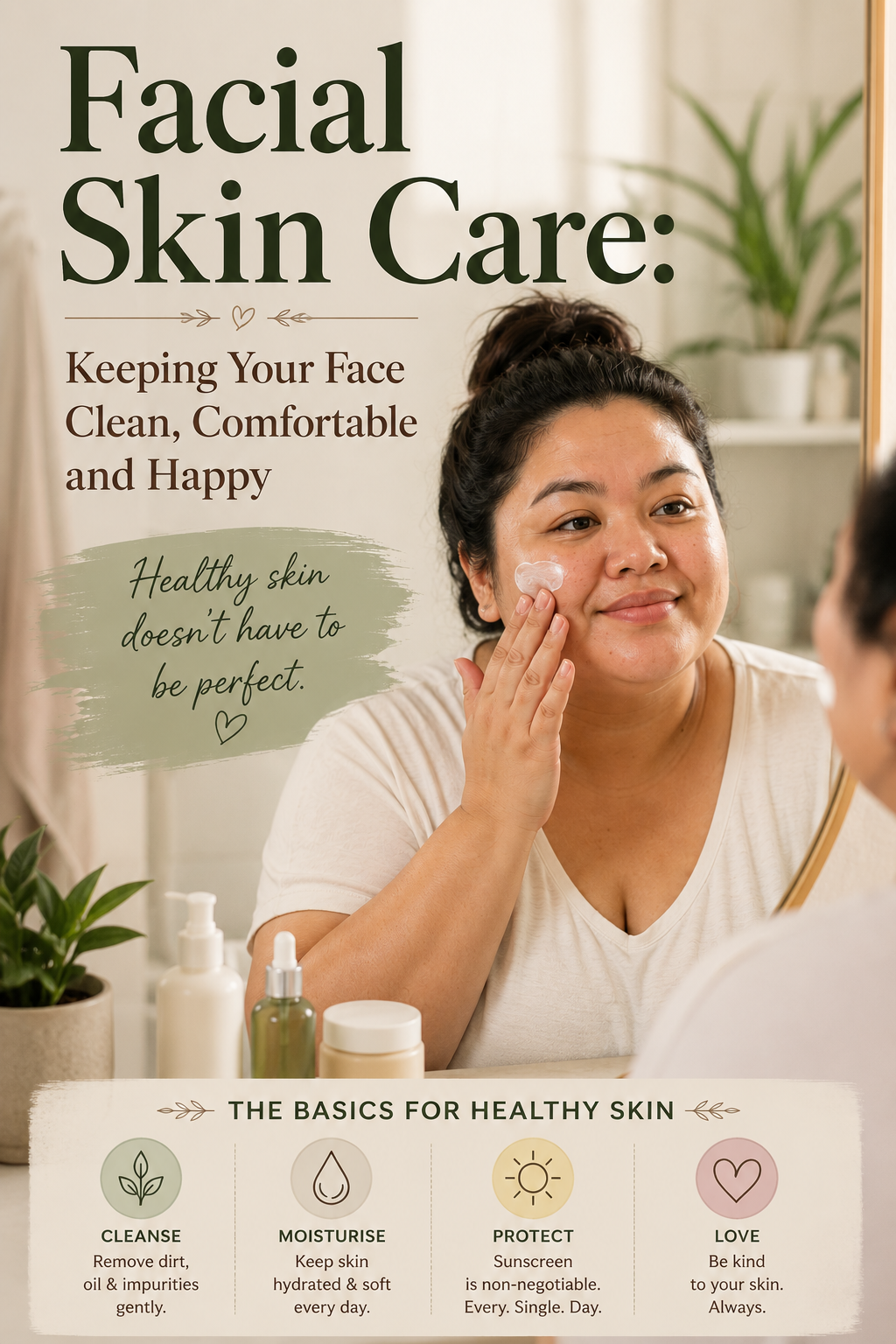
Now let's talk about the face.
Most of us have probably bought a facial cleanser because the bottle promised "glowing skin" or "brightening," bought a serum because someone on TikTok said we absolutely needed it, and then somehow ended up with twelve products sitting on the bathroom counter.
The truth is, facial skincare doesn't have to be complicated.
Whether you're plus-size, petite, young, older, male, female, or somewhere in between, the basic needs of your facial skin are pretty similar: keep it clean, protect it from the sun, keep it moisturised, and don't constantly attack it with products.
Your skin isn't asking for a 14-step routine. It probably just wants some peace.
Start With a Clean Face
Throughout the day, your face collects sweat, oil, dirt, sunscreen, makeup, and whatever else happens to be floating around in the environment.
A gentle facial cleanser can help remove these without stripping away all of your skin's natural oils or barrier.
For most people, washing the face once or twice a day is enough. If you've been exercising or sweating heavily, you may want to cleanse afterward.
Use lukewarm water rather than very hot water. Hot water might feel wonderful after a long day, but your skin may not share your enthusiasm.
And please don't scrub your face like you're trying to remove paint from a wall.
Gently massage the cleanser into your skin with your fingertips, then rinse.
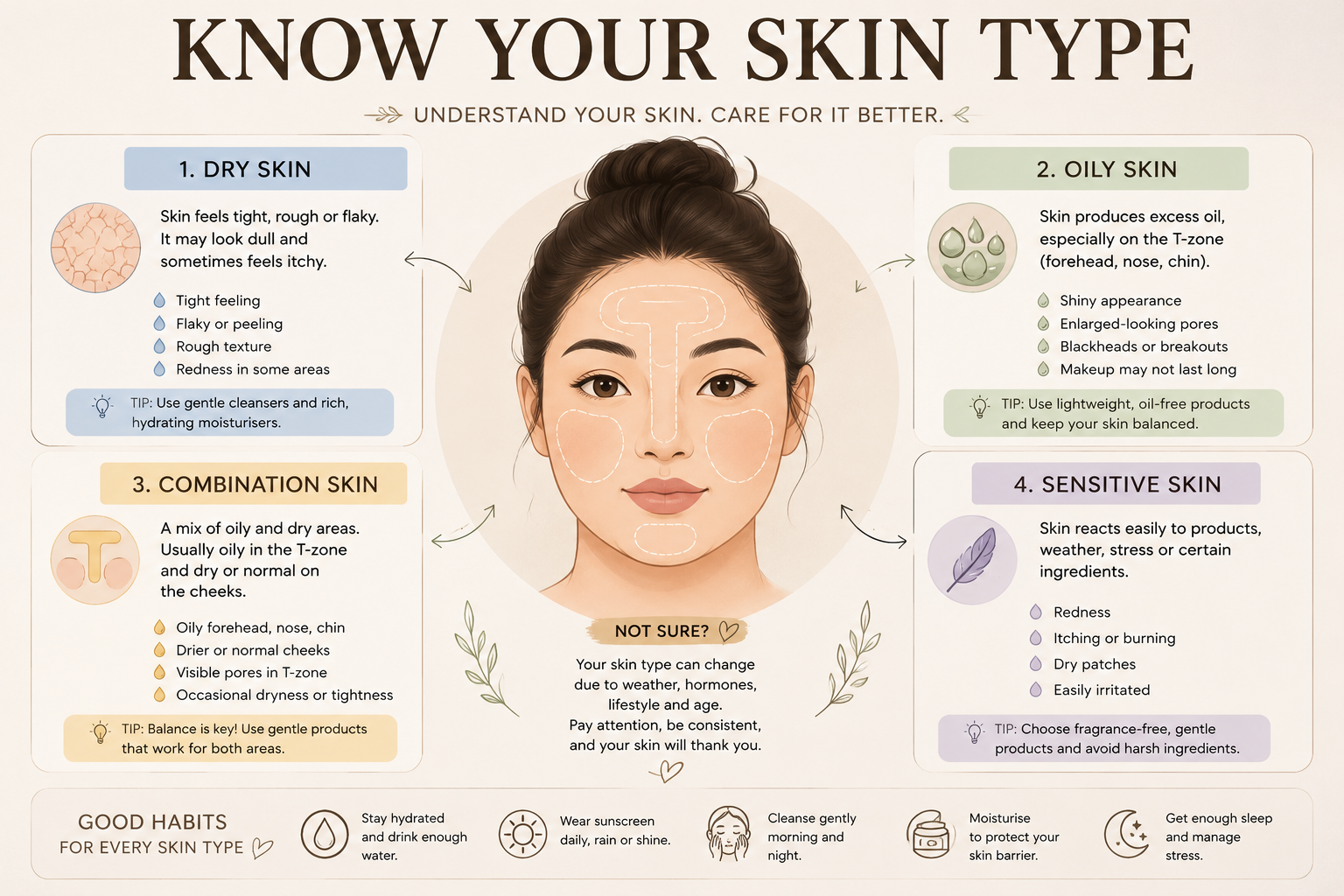
Your Skin Type Matters
Before buying every skincare product that happens to have a pretty bottle, figure out what your skin actually needs.
Oily skin
Your face may look shiny, especially around the forehead, nose and chin.
Look for lightweight, non-comedogenic products and avoid excessively harsh cleansers. Stripping the skin too aggressively can sometimes leave it feeling irritated and uncomfortable.
Dry skin
Your skin may feel tight, rough, flaky, or uncomfortable after washing.
A gentle cleanser and a moisturiser containing ingredients such as ceramides, glycerin, or hyaluronic acid can help support the skin barrier.
Combination skin
You may have an oily T-zone but drier cheeks.
This is extremely common, and it may take a little experimentation to find products that work comfortably across your face.
Sensitive skin
If your skin easily becomes red, itchy, burning, or irritated, keep things simple.
Fragrance-free and colour-free products can be a useful starting point, and introducing one new product at a time makes it easier to figure out what your skin likes or dislikes.
Moisturiser Isn't Just for Dry Skin
A common misconception is that people with oily skin don't need moisturiser.
They do.
Moisturiser helps support the skin barrier and reduce water loss. The trick is choosing a texture that suits your skin.
If you're oily, you might prefer a lightweight gel type or light-lotion.
If you're dry, you may prefer a richer cream type.
There is no prize for having the most expensive moisturiser on the bathroom shelf. Your skin mostly cares whether the product suits it.
Don't Forget Sunscreen
This is probably the least exciting part of skincare and one of the most important.
UV exposure contributes to premature skin ageing and can increase the risk of skin cancer.
Use a broad-spectrum sunscreen with SPF 30 or higher and apply it to exposed skin during the day. Don't forget areas such as the ears, neck, and the hairline.
If you're outdoors for an extended period, reapply according to the product instructions and your level of sun exposure.
And no, dark skin doesn't make someone immune to sun damage. Melanin provides some natural protection, but it doesn't eliminate the need for sunscreen.
Sweat and Your Face
If you live somewhere hot and humid (like Malaysia), you already know the situation.
You leave the house looking perfectly presentable and return looking like you've personally negotiated with the weather and lost.
Sweating is completely normal. The problem is when sweat, oil, sunscreen, and dirt sit on the skin for long periods and cause discomfort or contribute to clogged pores.
If you've been sweating heavily, gently cleansing your face afterward can help.
Avoid repeatedly wiping your face with rough tissues or towels. Patting the skin gently is kinder to the skin.
Be Careful With Exfoliation
Exfoliating can help remove dead skin cells and improve the feel of the skin, but more is never better.
Over-exfoliating can damage the skin barrier and leave your face irritated, dry, or unusually sensitive.
If you're new to exfoliation, start slowly and follow the instructions for the product you're using.
And don't combine several strong active ingredients simply because the internet told you that suffering equals skincare.
Your face is not a laboratory.
Don't Ignore Your Neck
Your face doesn't suddenly end at your jawline.
Your neck needs cleansing, moisturising, and sun protection too.
For some plus-size people, the neck may also have areas where skin folds or rubs together. Sweat and moisture can collect there, particularly in hot weather.
Always keep the area clean and dry, and pay attention to persistent redness, itching, pain, or unusual changes.
If a skin problem doesn't improve with basic care, it's better to have it assessed rather than continuously adding products and hoping for the best.
Change Your Pillowcase
This one is easy to forget.
Your pillowcase comes into contact with your face for hours every night and can collect sweat, oil, hair products, skincare residue, and dead skin cells.
Changing it regularly is a simple hygiene habit that costs very little and takes almost no effort.
If you have very oily skin, acne-prone skin, or sweat heavily at night, you may find that changing your pillowcase more frequently feels better.
Don't Pick, Squeeze and Attack
Pimples can be incredibly tempting.
You see one in the mirror and suddenly your fingers develop their own agenda.
Try not to squeeze or pick at spots. Doing so can increase inflammation and may lead to scarring or infection. And infection leads to more spots/pimples.
If acne is persistent, painful, or affecting your confidence, there are effective treatments available. A pharmacist, doctor, or dermatologist can help you choose an appropriate option.
What About Facial Hair?
Facial hair deserves attention too.
Whether you shave, trim, wax, thread, or leave it completely natural, keep the tools you use clean.
If shaving causes irritation, use a suitable shaving product and avoid repeatedly going over the same area.
Clean your razor regularly and replace disposable blades according to the manufacturer's recommendations.
The goal isn't perfectly hairless skin. It's healthy, comfortable skin.
A Simple Routine Is Enough
If you're overwhelmed by skincare, strip everything back. Keep it simple. Less is more.
Morning
1. Cleanse
Use a gentle cleanser if your skin needs it.
2. Moisturise
Choose something suitable for your skin type.
3. Sunscreen
SPF 30 or higher, broad-spectrum.
Evening
1. Cleanse
Remove sweat, sunscreen, makeup, and the day's grime.
2. Treatment, if needed
This could be an acne treatment or another product recommended for your particular skin concern.
3. Moisturise
Give your skin some support while you sleep.
That's it.
You can add other products later if you actually need them.
Your Face Doesn't Need to Be Perfect
Clear skin is nice, but healthy skin doesn't always look like the filtered faces we see online.
You can have pores.
You can have freckles.
You can have acne.
You can have scars, pigmentation, wrinkles, facial hair, or the occasional enormous pimple that appears the night before an important event because apparently skin has a sense of humour.
None of these things make you dirty.
Good facial hygiene is about keeping your skin clean, comfortable, protected, and healthy. It's not about achieving some impossible standard of perfection.
Take care of your face because it's part of you, not because you need to earn the right to feel good about how you look.