


Oral Hygiene: Taking Care of the Mouth That Does All the Talking
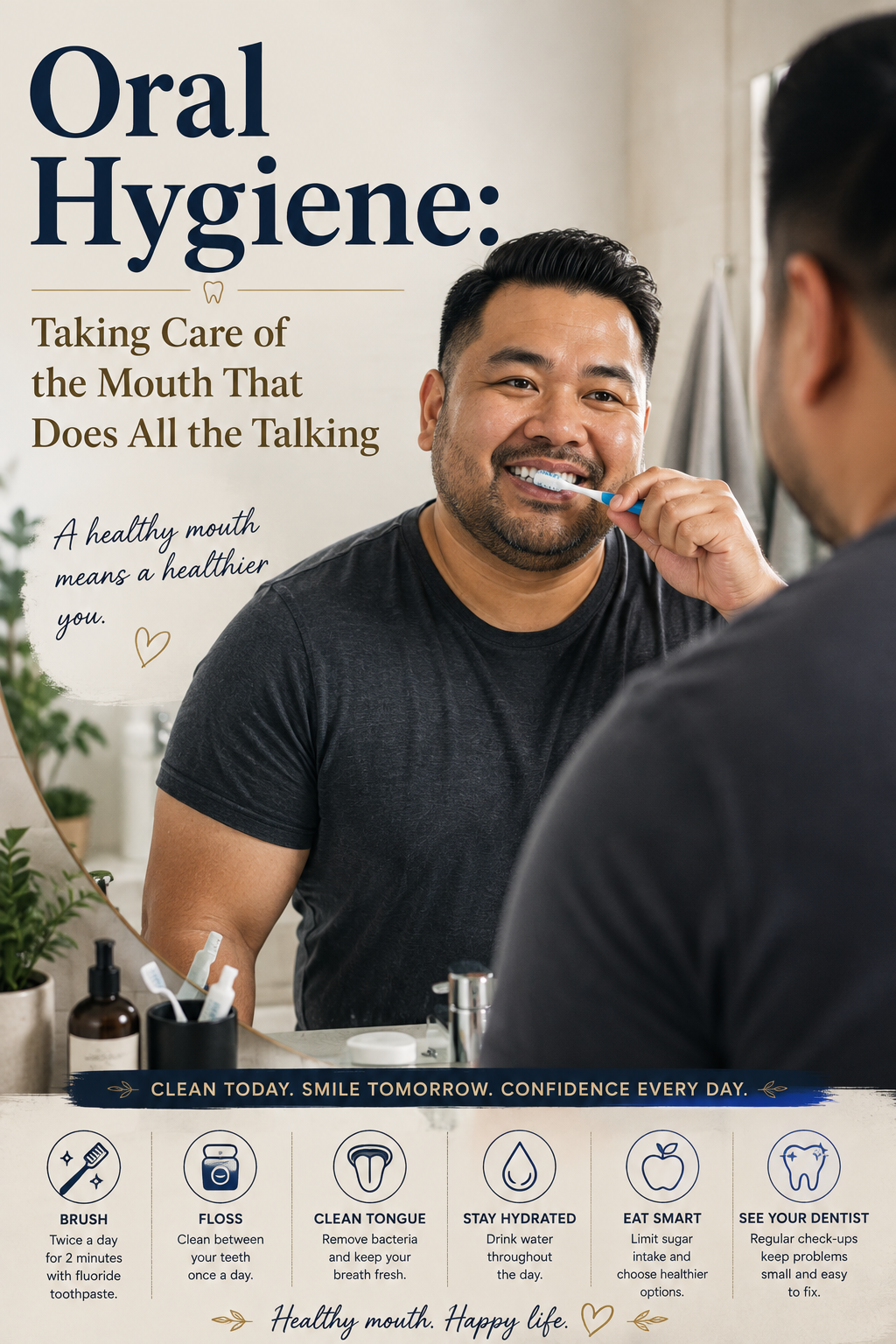
Let's talk about something we use every single day but probably don't think about nearly enough: our mouth.
We use it to eat, drink, talk, laugh, kiss, complain about traffic, and occasionally say things we probably should have kept to ourselves.
Good oral hygiene isn't just about having white teeth and fresh breath. It's about keeping your teeth, gums, tongue, and the rest of your mouth look healthy, feel healthy and are actually healthy. And despite what some advertisements might have you believe, you don't need a bathroom cabinet full of expensive products to do it.
Start With the Basics
The foundation of good oral hygiene is surprisingly simple:
Brush your teeth twice a day with toothpaste for about two to three minutes each time.
One of those brushing sessions should be the last thing you do before going to bed.
Why?
Because plaque is constantly forming on your teeth. If you don't remove it regularly, it can contribute to tooth decay and gum disease.
You don't need to brush aggressively, either. Gentle brushing is enough. Using too much pressure doesn't make your teeth cleaner. It can simply irritate your gums and wear away at your teeth over time.
Choose the Right Toothbrush
You don't necessarily need the most expensive electric toothbrush available. A good manual toothbrush can work perfectly well when you use it properly. Powered toothbrushes can also be helpful, especially for people who find it difficult to clean every surface of their teeth manually. For most adults, a toothbrush with soft bristles is a sensible choice. Replace your toothbrush or brush head approximately every three to four months, or sooner if the bristles become frayed or flattened.
Don't Forget Between Your Teeth
Here's the part many people skip. Your toothbrush can't properly reach every space between your teeth. Food particles and plaque can build up in those areas, which is why cleaning between your teeth is an important part of oral hygiene.
You can use:
- Dental floss
- Dental tape
- Interdental brushes
- Other suitable interdental cleaners
It is recommended to clean between your teeth once a day. If traditional floss is awkward or uncomfortable, don't simply give up. Try an interdental brush or another tool that works better for you. The best method is the one you can use properly and consistently.
Your Tongue Deserves Attention Too
Your tongue has a rough surface that can collect bacteria, food particles, and debris. When brushing your teeth, gently brush your tongue as well. Some people prefer using a tongue scraper. That's fine too. Just don't go overboard and scrape your tongue like you're trying to remove the top layer of civilization. Gentle cleaning is enough.
What About Mouthwash?
Mouthwash can be useful in certain situations, but it isn't a replacement for brushing and cleaning between your teeth. Think of it as an additional tool rather than the foundation of your routine. If you're using a fluoride mouthwash, don't automatically use it immediately after brushing. Doing so can wash away the concentrated fluoride left behind by your toothpaste.
If you're unsure whether you actually need a particular mouthwash, your dentist can help suggest some options that suits you.
Fresh Breath Starts With Oral Hygiene
Bad breath isn't always caused by the food you ate. It can come from bacteria, plaque, gum problems, dry mouth, certain foods, smoking, or other underlying issues. Brushing, cleaning between your teeth, cleaning your tongue, and staying hydrated can all help. Sugar-free chewing gum can also increase saliva production and may contribute to reducing tooth-decay risk when used alongside normal oral hygiene.
If bad breath continues despite good oral hygiene, don't simply keep buying stronger mints. Persistent bad breath can sometimes be a sign that something needs attention. Check with a dentist or your local GP. Sometimes bad breath is a sign of having gut related issues.
Watch Your Sugar Intake
You don't have to completely ban sugar from your life. But frequent sugary snacks and drinks give the bacteria in your mouth more opportunities to produce acids that contribute to tooth decay. Try to limit how often you consume sugary foods and drinks, especially between meals.
Water is a particularly useful everyday drink because it helps keep your mouth hydrated without adding sugar.
Don't Brush Immediately After Acidic Foods
This one is surprisingly easy to miss. Acidic foods and drinks can temporarily soften tooth enamel. Brushing immediately afterward may contribute to enamel wear. If you've just had something acidic, such as certain fruit juices or soft drinks, rinsing your mouth with water and waiting at least 30 minutes before brushing is a better approach.
Again, your teeth aren't kitchen tiles. They don't need immediate aggressive scrubbing after every meal.
Dry Mouth Matters
A dry mouth can be uncomfortable and can increase the risk of dental problems. It can happen for many reasons, including dehydration, certain medications, medical conditions, or simply not producing enough saliva. If your mouth often feels dry, drink water regularly and consider sugar-free gum to stimulate saliva.
Persistent dry mouth is worth discussing with a healthcare professional or dentist because the underlying cause may need attention.
Don't Forget Your Gums
Healthy gums shouldn't constantly bleed when you brush or floss. A little bleeding can happen when someone starts cleaning between their teeth after not doing it regularly, but persistent bleeding, swelling, tenderness, or changes in the gums shouldn't simply be ignored.
Plaque buildup is a major contributor to gum disease, so regular brushing and interdental cleaning matter. If something doesn't seem right, get it checked.
Regular Dental Visits Still Matter
You can have a very good home routine and still benefit from regular dental check-ups. Some dental problems don't cause obvious symptoms in the beginning. A dentist can identify problems earlier and recommend treatment or preventive care.
Don't wait until you're sitting in the dental chair thinking: "Maybe I should have come six months ago."
Your future self will probably have some strong opinions about that decision.
Does Being Plus-Size Change Oral Hygiene?
Not really.
There isn't a special toothbrush, toothpaste, or flossing technique required simply because someone is plus-size. However, there are practical considerations that can make oral care easier. If standing at a bathroom sink for several minutes is uncomfortable, you can sit on a stable stool while brushing. If bending over the sink is difficult, adjust your position or use a cup for rinsing. If you have limited mobility in your hands or shoulders, a powered toothbrush or alternative interdental cleaner may make the routine easier.
The point isn't to force yourself to follow someone else's routine. The point is to find a routine that you can actually maintain.
A Simple Daily Routine
If you want to keep things uncomplicated:
Morning
- Brush for about 2 minutes with fluoride toothpaste.
- Gently clean your tongue.
- Drink enough water.
During the Day
- Stay hydrated.
- Keep sugary snacks and drinks under control.
- Clean between your teeth once a day.
Night
- Brush again for about 2 minutes.
- Clean between your teeth if you haven't already.
- Then leave your mouth alone for the night.
Your teeth have worked the entire day. They deserve a little peace.
Your Smile Doesn't Have to Be Perfect
Oral hygiene isn't about having perfectly white teeth.
Natural teeth aren't necessarily bright white. Teeth can have different shades, small imperfections, gaps, fillings, stains, or other characteristics that make them uniquely yours. The important thing is keeping your mouth healthy. Take care of your teeth because they help you eat, speak, smile, and enjoy life confidently.
You don't need a perfect smile. You just need a healthy one.