

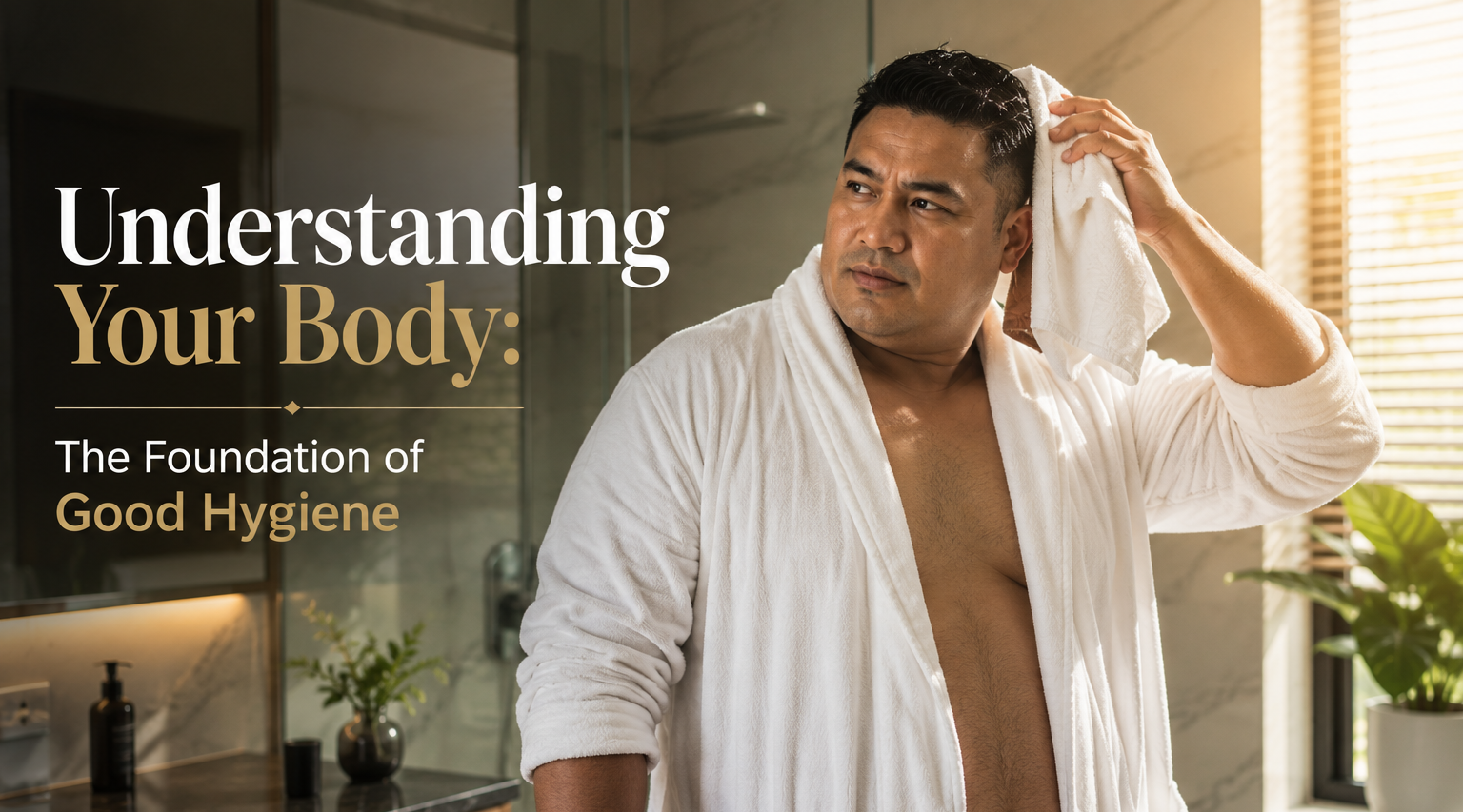
Understanding Your Body: The Foundation of Good Hygiene
Before we talk about products, routines, or hygiene tips, it's VERY important to understand one thing: YOUR BODY IS NOT THE PROBLEM.
Every body is different. Height, weight, gender, age, hormones, genetics, climate, and medical conditions all affect how our bodies function. Personal hygiene isn't about trying to make your body behave like someone else's. It's about learning what your body needs and what responds to it.
For plus-size individuals, there are a few natural characteristics that can influence daily hygiene. Knowing why these things happen can help you care for yourself more effectively and with less frustration.
Sweat Is Normal
Sweating is one of the body's natural cooling systems. It helps regulate temperature and prevents overheating. Everyone sweats, regardless of body size.
However, carrying more body mass may cause some people to produce more sweat during physical activity or in hot weather because the body has to work harder to stay cool. This doesn't mean there's anything wrong with you. It's simply how the body functions.
It's also important to know that sweat itself has very little smell. Body odour develops when bacteria on the skin break down sweat, especially in warm, damp areas such as the underarms, groin, or beneath the breasts.
The goal isn't to stop sweating completely. It's to keep the skin clean and dry whenever possible.
Skin Folds Are Normal
Many plus-size people have areas where skin naturally rests against skin. These can include the abdomen, under the breasts, inner thighs, neck, or other parts of the body.
When skin stays in contact for long periods, heat and moisture can become trapped. If the area isn't cleaned and dried regularly, it may become irritated or develop a fungal or bacterial infection.
Having skin folds is not a sign of poor hygiene. They simply require a little extra attention during your daily routine.
Friction Can Affect Skin Health
When skin rubs against skin or clothing, it creates friction. Over time, this can lead to chafing, redness, tenderness, or even small breaks in the skin.
Common areas include the inner thighs, under the breasts, the sides of the abdomen, and under the arms.
Reducing friction through proper clothing, moisture control, and protective products can make everyday activities much more comfortable.
Moisture Needs Attention
Warm, humid environments can make moisture difficult to control. After bathing, exercising, or spending time outdoors, it's important to dry areas where moisture tends to collect.
Many people rush after a shower, but taking an extra minute to gently dry skin folds can help reduce irritation and lower the risk of fungal infections.
Clean skin is important, but dry skin is equally important in areas where moisture tends to build up. (Even I have the habit of air-drying myself after showers. Trust me guys & gals, it helps!!!)
Body Odour Is Influenced by Many Factors
Body odour isn't determined by body size alone.
Diet, hormones, medications, stress, certain medical conditions, clothing fabrics, climate, and daily hygiene habits all influence how a person's body smells.
Two people of the same size can have completely different body odours. Likewise, a slim person can experience body odour just as easily as someone who is plus-size.
Understanding this helps remove unnecessary shame and encourages practical solutions instead.
Comfort Is Part of Hygiene
Good hygiene isn't only about smelling fresh.
It's also about preventing discomfort, reducing irritation, protecting your skin, and feeling confident throughout the day.
When your skin is healthy and comfortable, daily life becomes easier. Walking, exercising, working, and sleeping can all feel more enjoyable when your body is well cared for.
Be Kind to Yourself
For many plus-size people, conversations about hygiene have been surrounded by embarrassment or hurtful stereotypes. That can make even simple self-care feel emotionally difficult.
This series isn't about judgment or criticism.
It's about understanding your body, respecting it, and giving it the care it deserves.
Everyone deserves to feel clean, comfortable, and confident, regardless of their size.
Now that we've covered why these differences exist, the next article will focus on the first step in your hygiene routine: caring for your hair and scalp.
Do not hesitate to ask any questions or share your tips about this matter in the comment section below.